
A Beautiful Mistake

Small towns often work best for photo ops on patriotic holidays or as a metaphors in John Mellencamp songs. To live in them? That’s another thing. To govern them? In bocca al lupo, as the Italians say.
I thought of this last week when I saw Antonio Cangiano’s recent post in his Substack publication Italy with Antonio, titled bluntly: “Moving to a Tiny Village in Italy is Almost Always a Mistake.” It came to mind again a few days later when I read a story in the local newspaper about our friend Marco Fabiani, mayor of Monteleone di Fermo, the undeniably tiny village where C and I have our home.
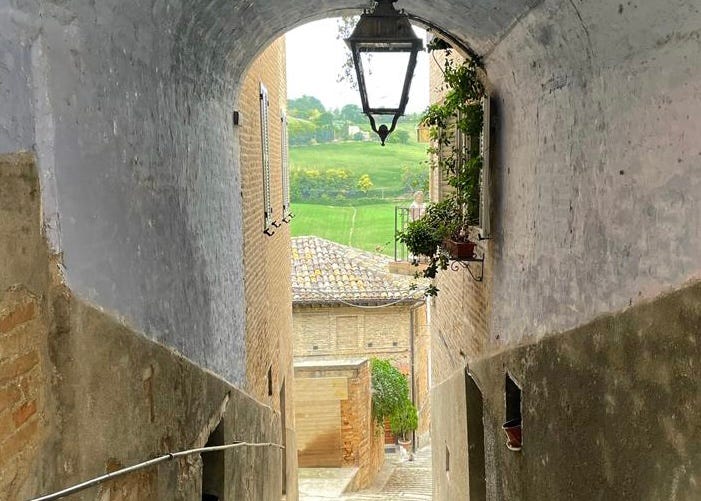
Marco is running for reelection at the moment: after already having served as sindaco for two terms, he’s campaigning for a chance to lead this Brigadoon town of 350 people for another three years. Does he know something that Cangiano is missing? Why would a successful lawyer fight for a part-time position governing a place that according to statistics will most likely to fade into the mist by the end of the next decade?
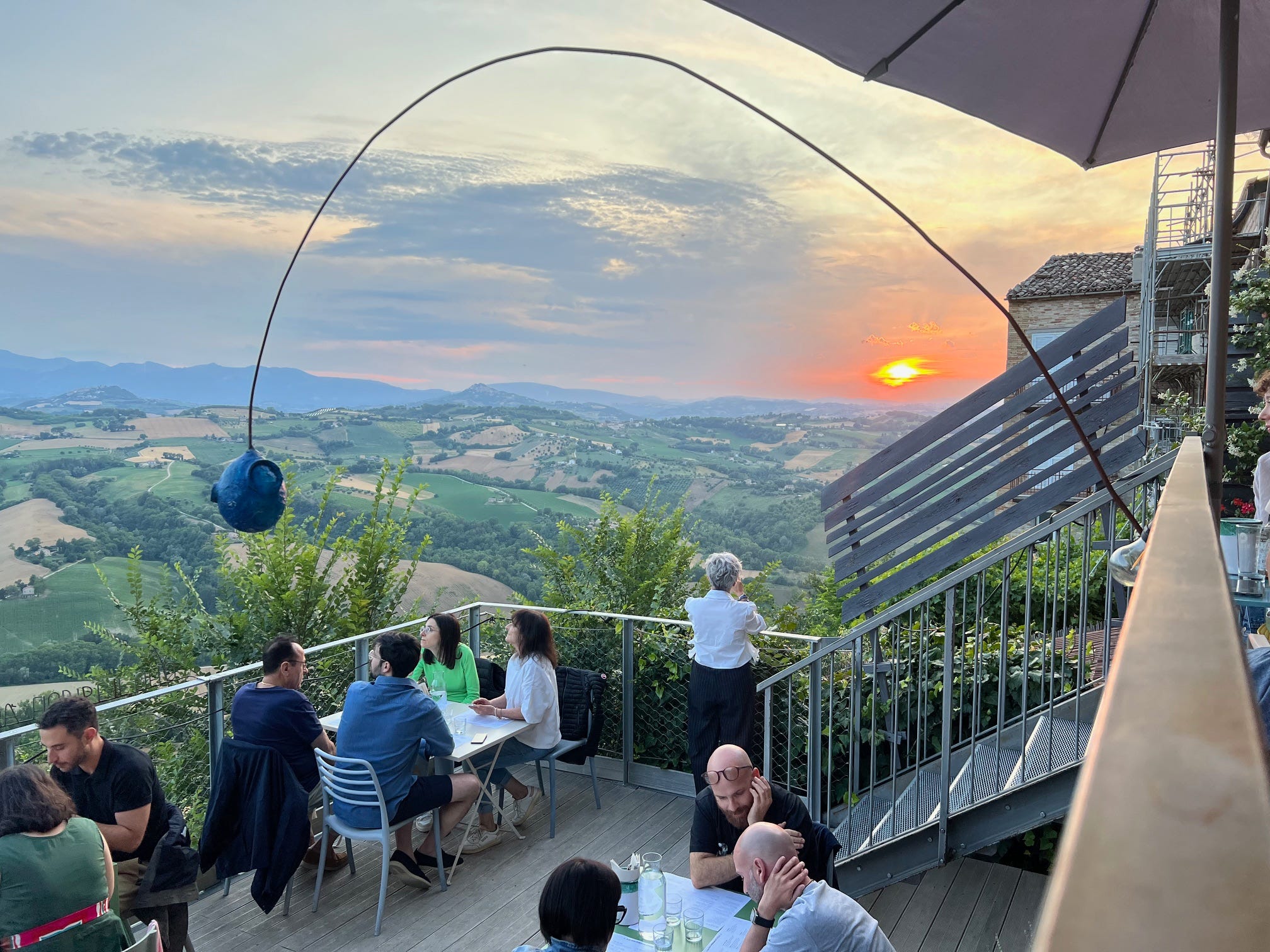
Monteleone di Fermo ticks almost every box that the Italy with Antonio says to avoid. Less than 15,000 people? Definitely. Limited local services in town? Check. More than 25 minutes to the nearest emergency room? Depends on how fast you can take a series of 180 degree curves while suffering from muscle spasms, but yea, probably. Earthquake zone? That too. On the plus side, there’s a great sunset burger bar that packs ‘em in during the summer. Of course, it’s closed the other eight months of the year, or open only for Sunday brunch.
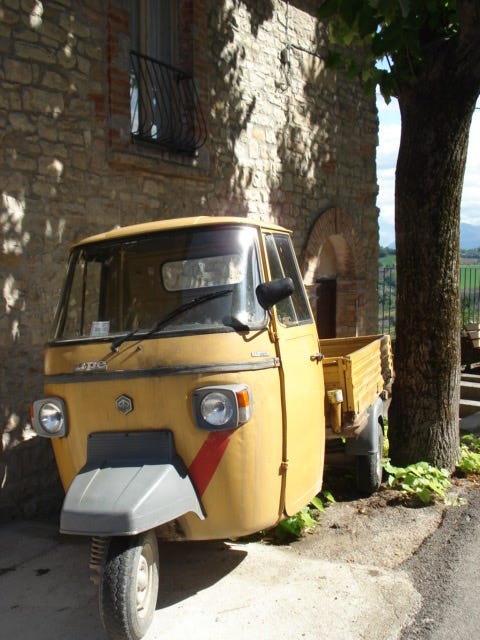
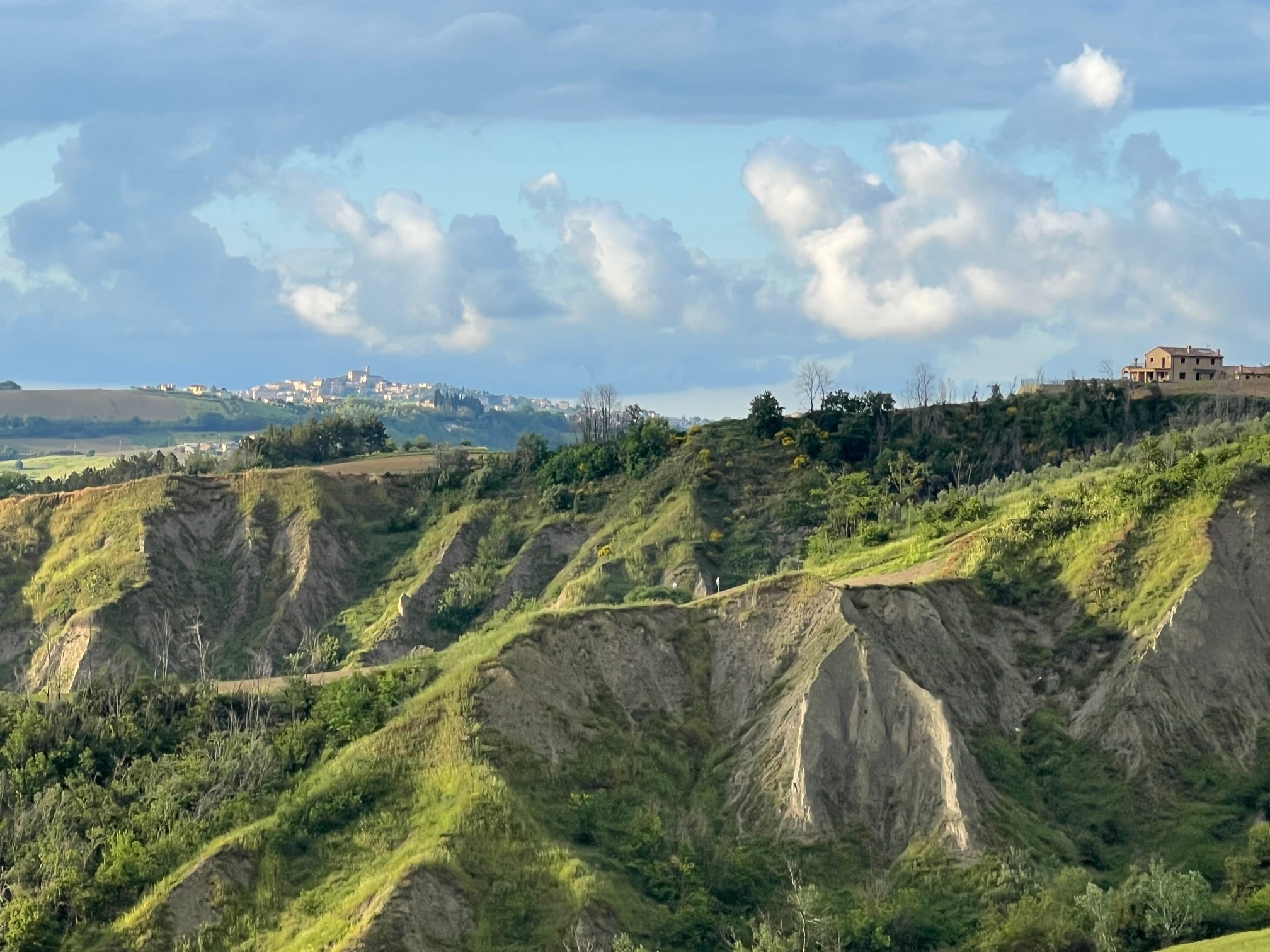
What Monteleone di Fermo does have in Piaggio Ape-loads is eye candy. Situated on a hill 1400 feet above sea-level, sandwiched between the dramatic ridges of the Sibilini Mountains and blue calm of the Adriatic Coast, the town gazes onto the soft belly of the Italian countryside, the towers and stone farmhouses of the surrounding villages rising up in relief against a backdrop that could have been painted 500 years ago. One day I went to the Post Office, which is only open two days a week. It’s a cramped, broom closet of a place, usually filled with elderly people trying to pay a bill. But this was the view:
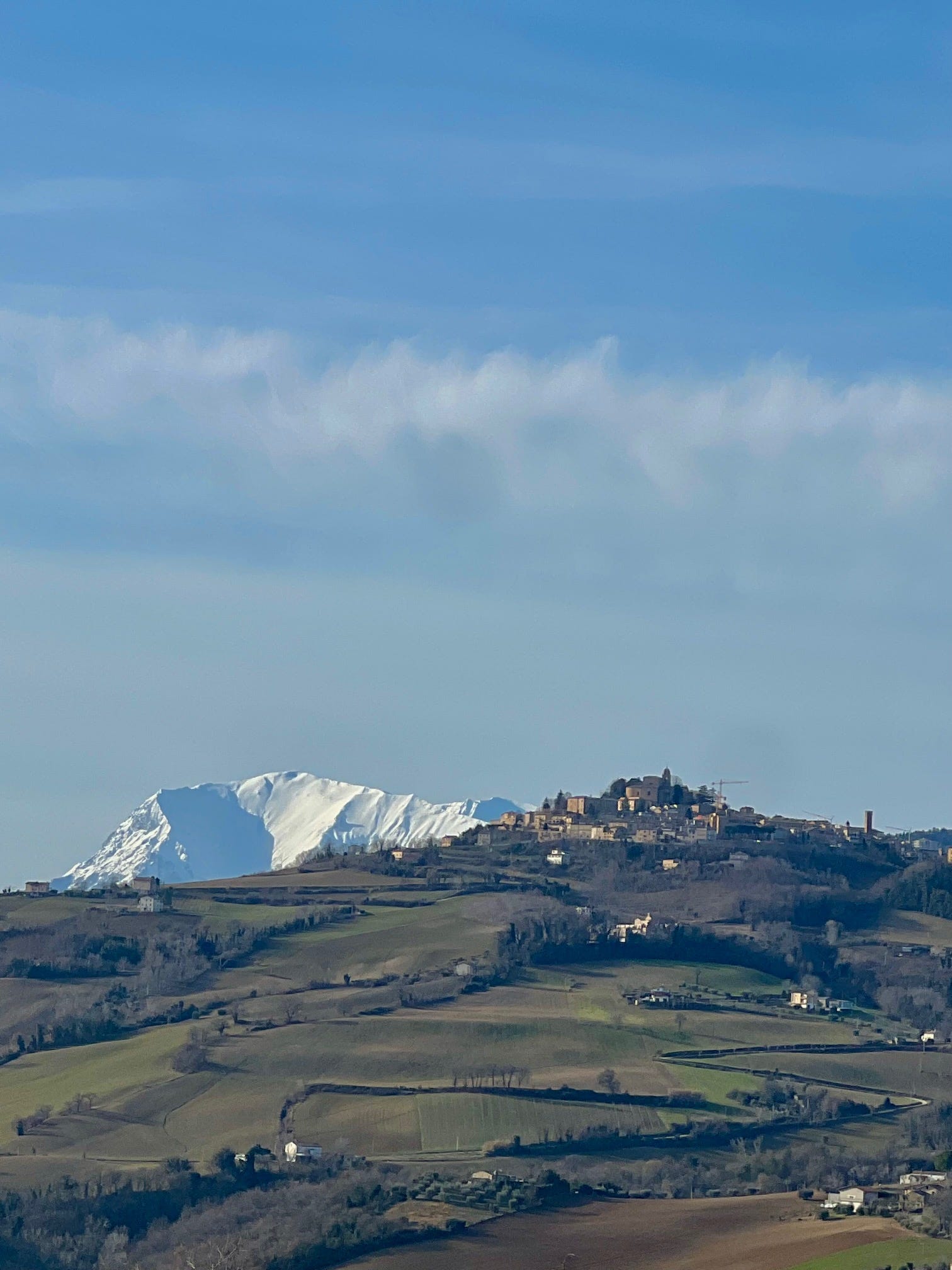
You’d think that alone would be enough to persuade the staff to open it up at least three days a week.
Of course, the challenge is that the picturesque medieval hill towns that pop up on the fringes of Monteleone’s view all have views of their own, as do thousands of other small borghi across the country. A postcard panorama of bucolic tranquility is not a unique selling proposition in Italy. It doesn’t keep young people on the farm. Nor does it attract enough foreigners to replenish the ranks.
As Cangiano points out, Italy has almost eight thousand comuni like Monteleone, and 5000 of them are shrinking. Many are already ghost towns, and almost all of the rest are feeling pretty spooky. Local, national and European leaders have tried a full regimen of life-saving measures: 7% flat tax for foreigners, 1 euro houses, summer concert series, more roundabouts (not sure why the EU thought that one would work)— none of which have breathed life back into the patient.
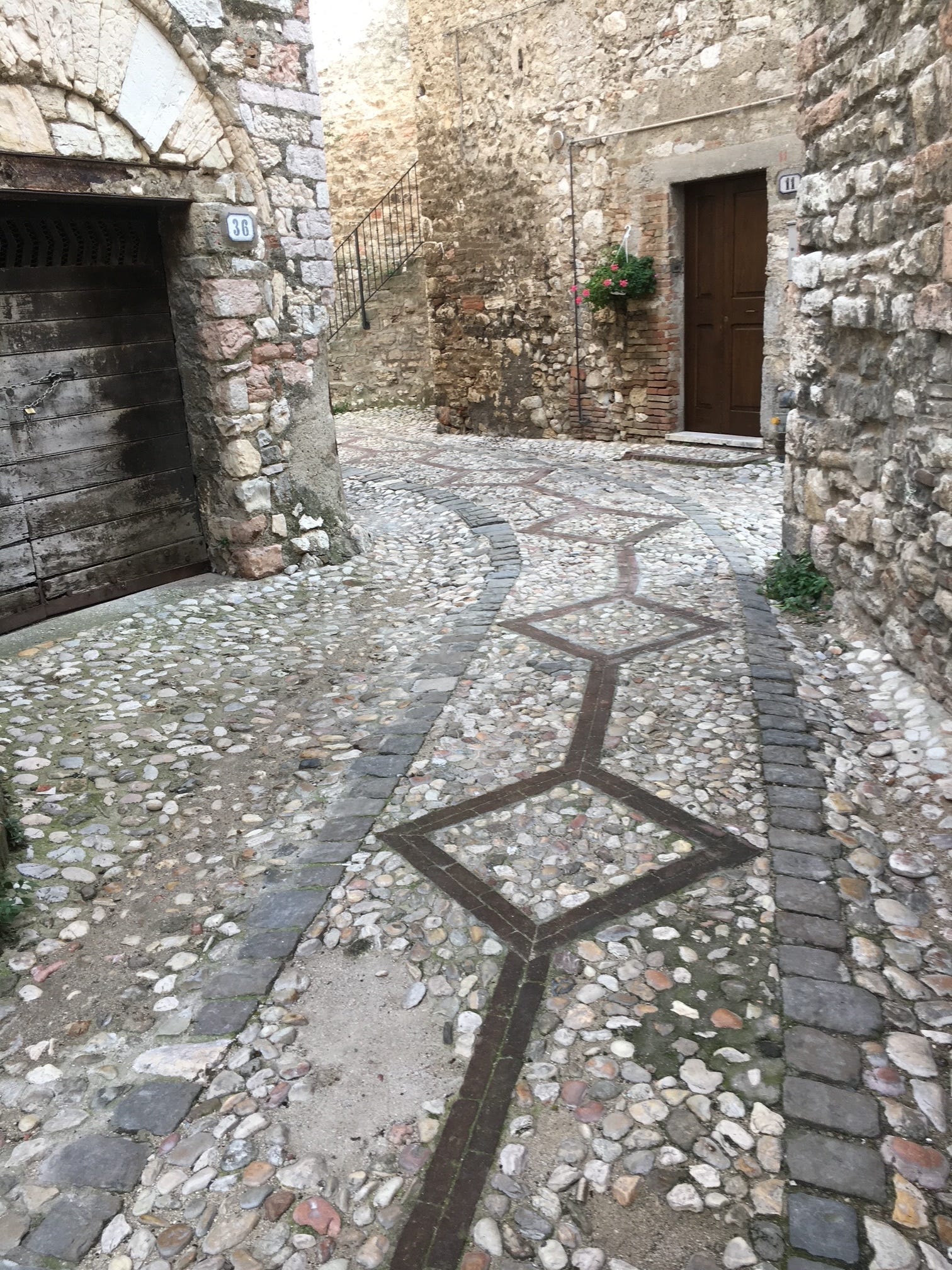
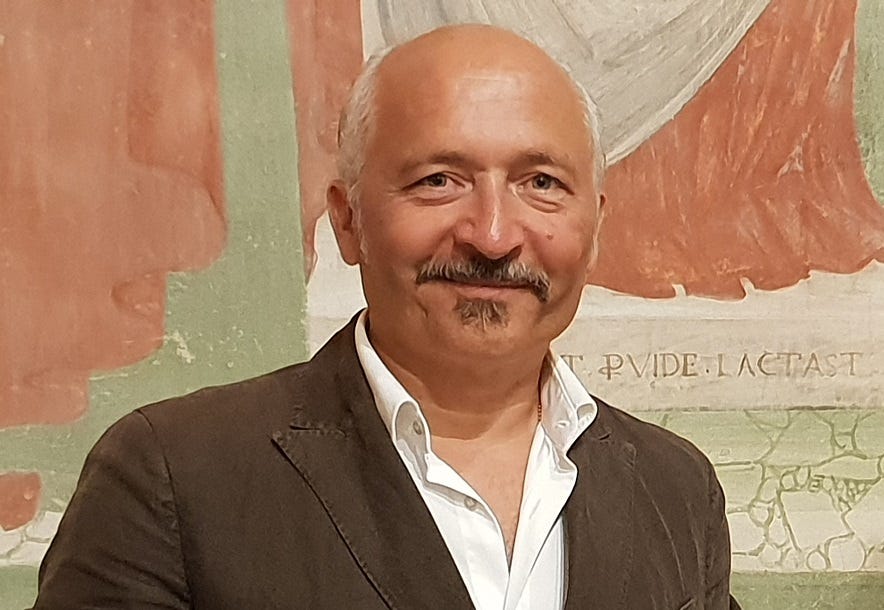
Several years ago, Marco, whose Van Dyke mustache and goatee give him an appearance something like a 16th century duke from Northern Europe, hung a banner in Piazza Umberto I announcing “A New Renaissance” for Monteleone, and he’s left no stone unturned in his efforts to realize the vision. He’s restored the Santa Maria della Misericordia, a jewel-box of a church with a completely frescoed interior; built new tennis courts and bicycle paths; and created the Parco Dei Vulcanelli di Fango where one can observe the rare geological phenomenon of small underground volcanoes that erupt with a mix of mud, water and methane gas. There are philosophy lectures and poetry readings in the summer, artist retreats, concerts, and a small museum depicting farm life at the turn of the century.
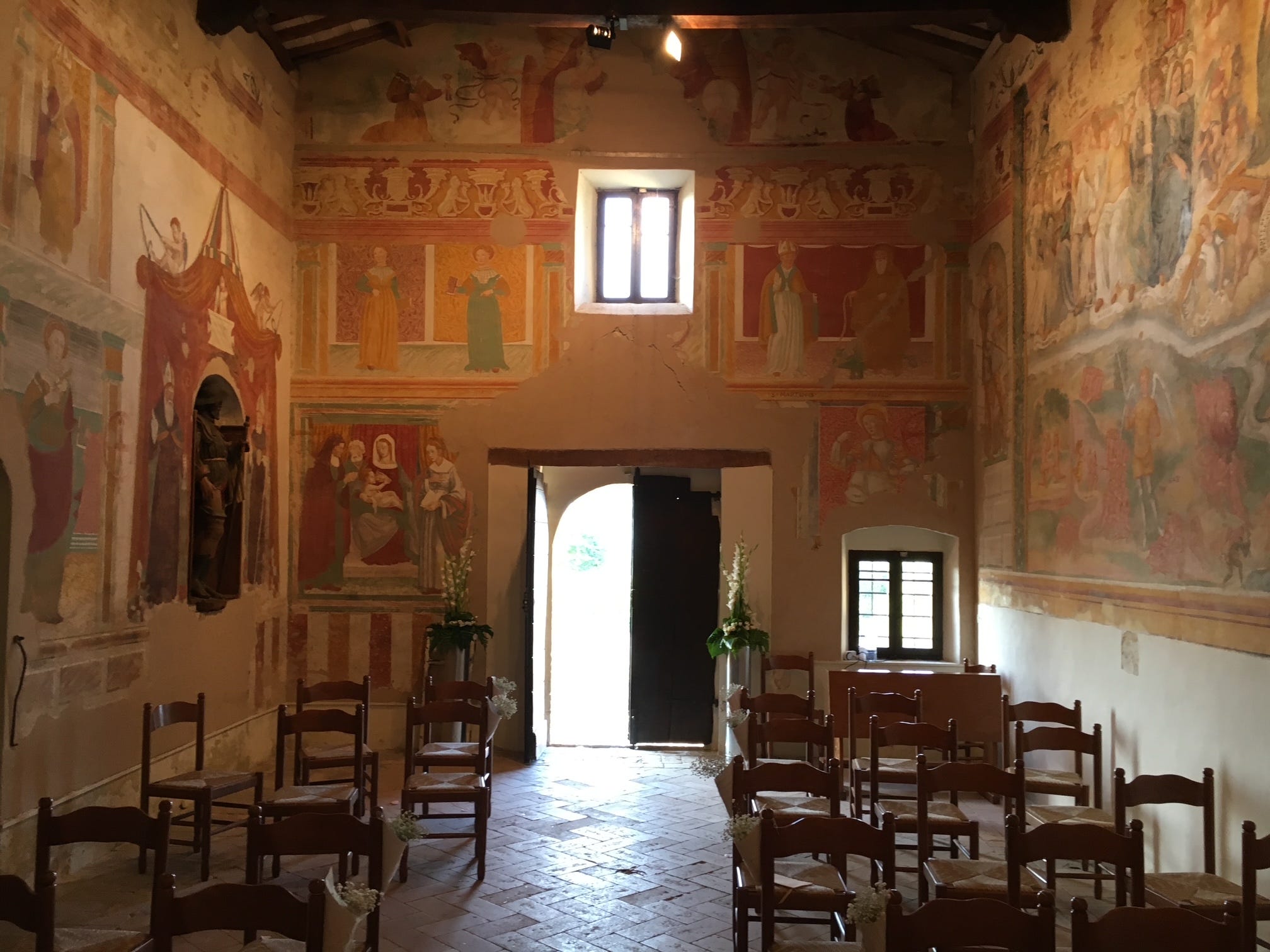
Still, building a Renaissance on tennis courts, a philosophy festival, and congealing puddles of mud is a hard undertaking. For the first time, Marco is facing significant opposition as the town heads to the polls next week to choose between him and the return of his predecessor. As we’ve all seen, there are always those ready to step back from the Renaissance to the Dark Ages. In a place like Monteleone, nostalgia is an ever-present force, whether it’s aimed at recapturing past glories or simply retreating from the future.
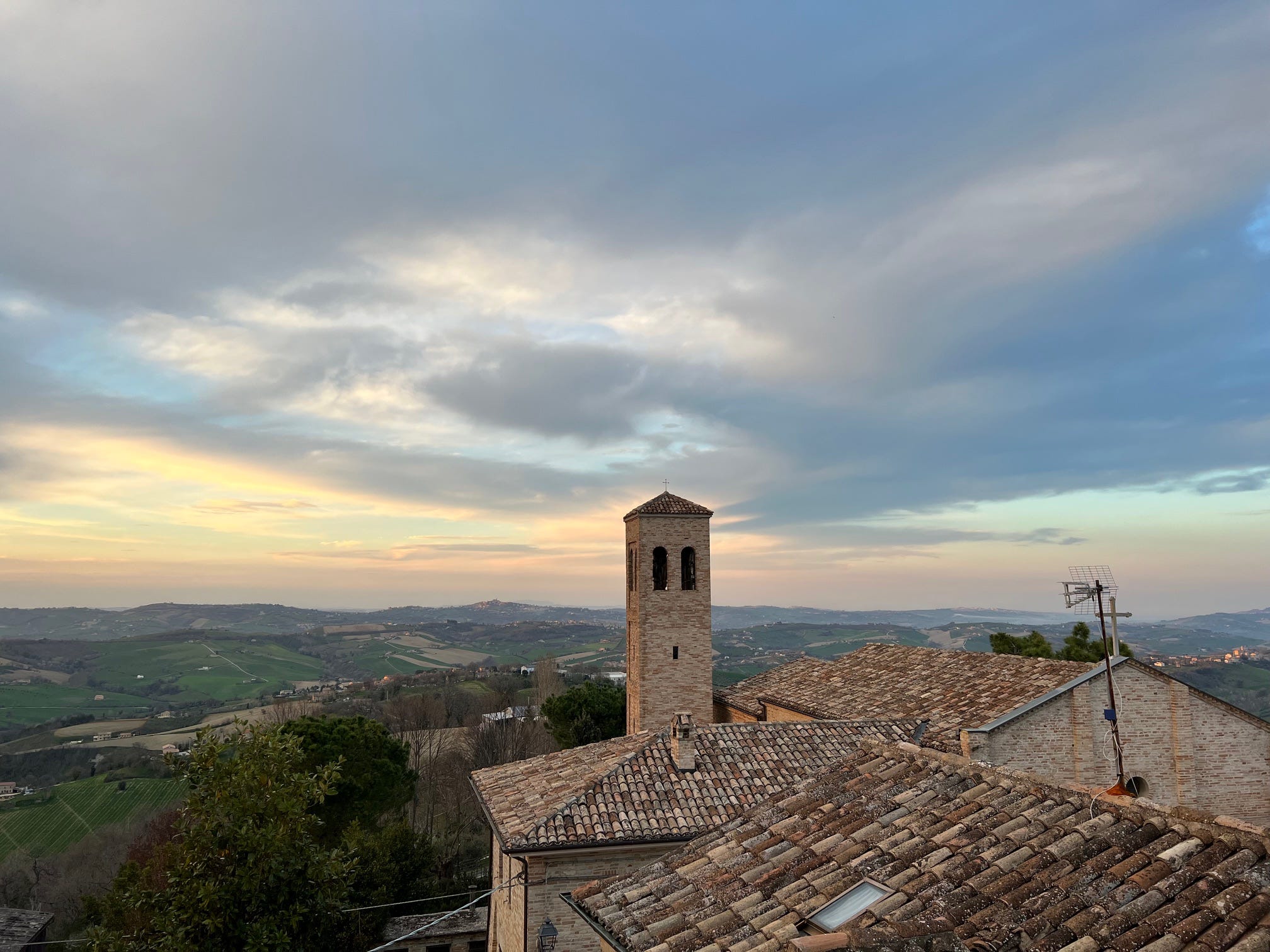
Early in Marco Fabiani’s first term as sindaco, he took C and I and several friends from New York on a “tour” of the town, showing up like a zealous college recruiter with Monteleone hats and t-shirts, along with jars of local honey. He pointed out the pre-Roman carvings on the church of San Giovanni Battista and the newly restored painting of the Madonna di Loreto. At one point, he had us scaling a ladder to the top of the bell tower.
At the Santa Maria della Misericordia, he narrated the full history of the fresco cycle on the walls. But because his regular translator was unavailable, he had prevailed upon Fulvio, an entirely unprepared village local with a name straight out of a Shakespearean comedy, to come along and recount it all in English. Fulvio’s language skills were excellent, but he knew nothing about art, so he struggled mightily to understand what Marco was explaining in Italian. For anyone with even a slight proficiency in both languages, the translation was hilarious.
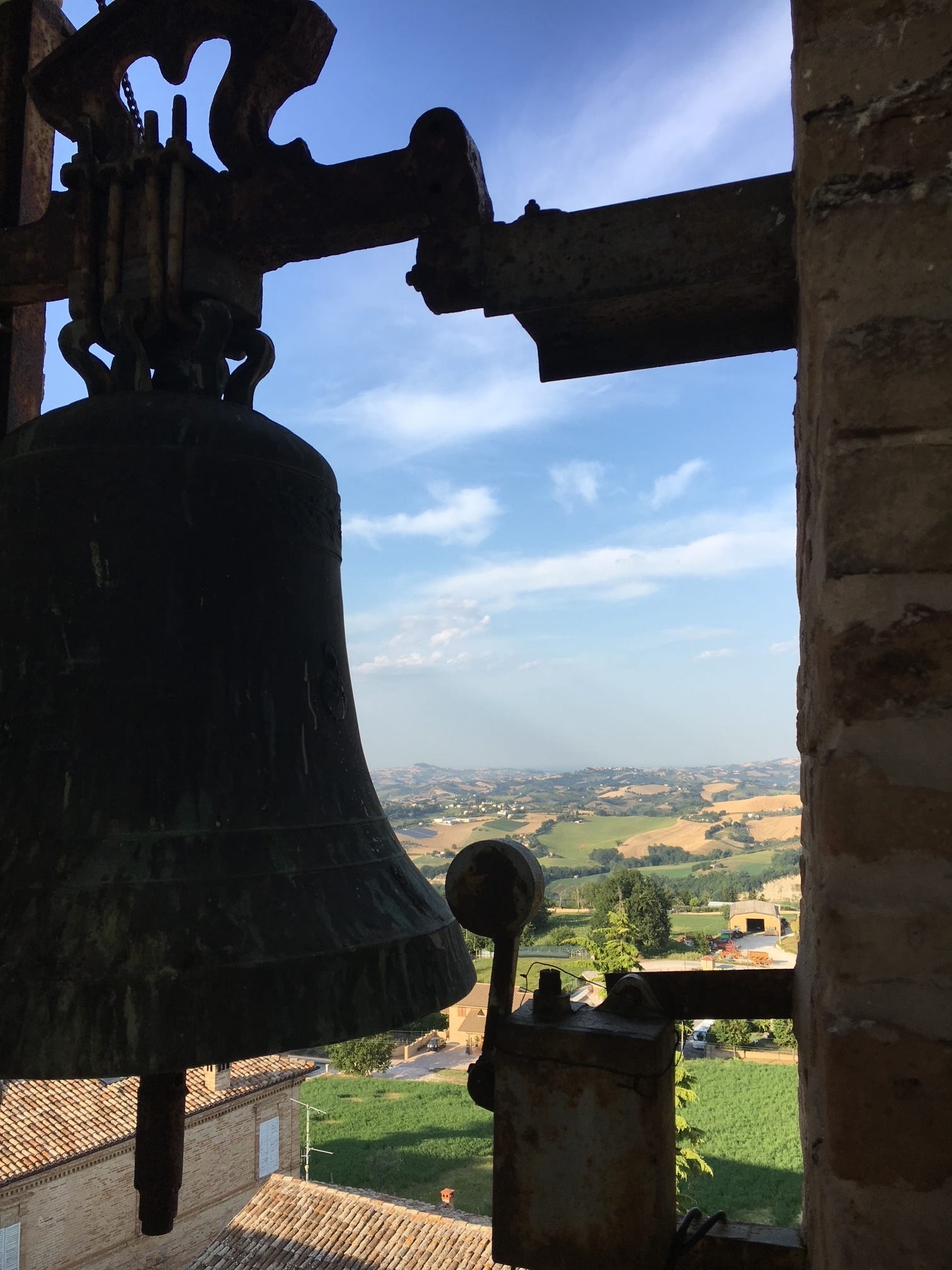
During that tour, I had my first hint of what makes someone like Marco run toward a challenge most would dismiss as a lost cause. As we looked out from behind the iron bell in the wooden dome of the tower, soaking up those sun-sweetened views, the new mayor was not so much thinking ahead as remembering, recalling the Monteleone in which he grew up: before the pasta factory closed and jobs disappeared, when the pizzeria was one of the area’s best, when the Biker Fest filled the piazza in the summer.
People like Marco Fabiani believe in the potential of their tiny town because they remember its past and the people who built it. There’s no translating that to those whose calculus for desirability is based on proximity to a hospital or reliable wi-fi.
Italy with Antonio is a newsletter that aims to offer actionable advice to foreigners considering a move to Italy and I can say from experience that the information it provides is spot-on: well-researched, honest, and comprehensive to a fault. Every drawback Cangiano cites about life in a tiny village in Italy is unassailably true, from the February cold to the perils of living in a seismic zone. None of it makes me regret buying a home in Monteleone di Fermo.
As sound as Antonio’s reasoning is, my mind simply doesn’t work that way. To be honest, I’m not sure that for someone whose mind does work that way, Italy is the best choice. The world is full of more practical places to live.
Small towns here make their case in ways that don’t show up in a livability study. I like running into the mayor on the tennis court or having him join our Thanksgiving dinner. I like neighbors who show up unannounced with vino cotto or cherries. I like the fact that garbage day at the town dump is a social event; that when you’re at the burger bar, Fulvio waves to you from his terrace next door; or that our biggest security risk is a break-in by a wild boar.
Maybe it’s a mistake, but given the choice between a mid-size city surrounded by shopping plazas or industrial centers, I’ll take a park bench in Monteleone di Fermo, grazie. The views are good, and the ghosts are friendly. And at least for now, I know the sindaco.
Thanks so much!! It's such a blessing to find the place and community that works for our lives and personalities, whether it's New York or Monteleone or Portland, Oregon or San Diego. It doesn't have to make sense to anybody else-- we know it's right for us.
I moved to a tiny town of 1,200 on the outskirts of Cremona years ago, and while 1,200 feels like a booming metropolis compared to your 350, the checkboxes are exactly the same.
There is something irreplaceable about a place where everyone calls the mayor by their first name, and if a cat goes missing, its picture is all over the local Facebook group within minutes with the whole community trying to trace it back. I get to see the sun set every day.
At the end of it all, we have to start asking ourselves what is it we want out the place we live in? Shopping malls or people and sunsets?