
A Chip Off the Old Block

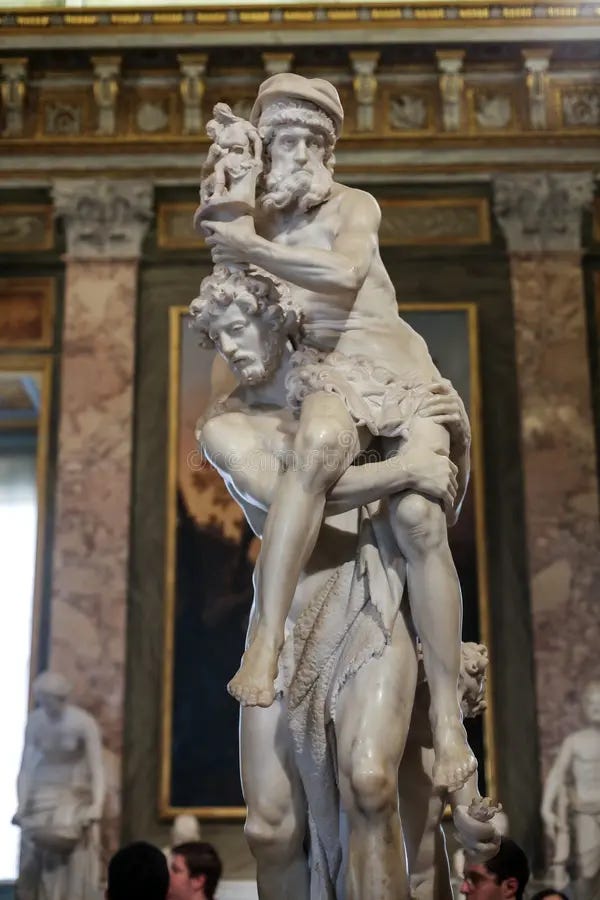
The recently closed “Bernini e i Barberini”, Rome’s art event of the season, opened not with a sculpture from the legendary Baroque master Gian Lorenzo Bernini, but rather with several works by his artist father, Pietro. Maybe that’s how it should be for a lot of us really. Asked to plan a museum retrospective show of our own lives, many of us would or should give the first room to Mom and Dad. Each of us entered this world as an apprentice. No one, not even a great artist, creates themselves.
Gian Lorenzo Bernini was born to Angelica Galante and Pietro Bernini in 1598, the sixth of 15 children. Luckily, the father Pietro was a busy, if not groundbreaking, artist with a career split between Florence and Naples. In 1606, upon receiving an invitation from Pope Paul V to work on the Pauline Chapel in the Basilica of Santa Maria Maggiore, he moved the family to Rome.
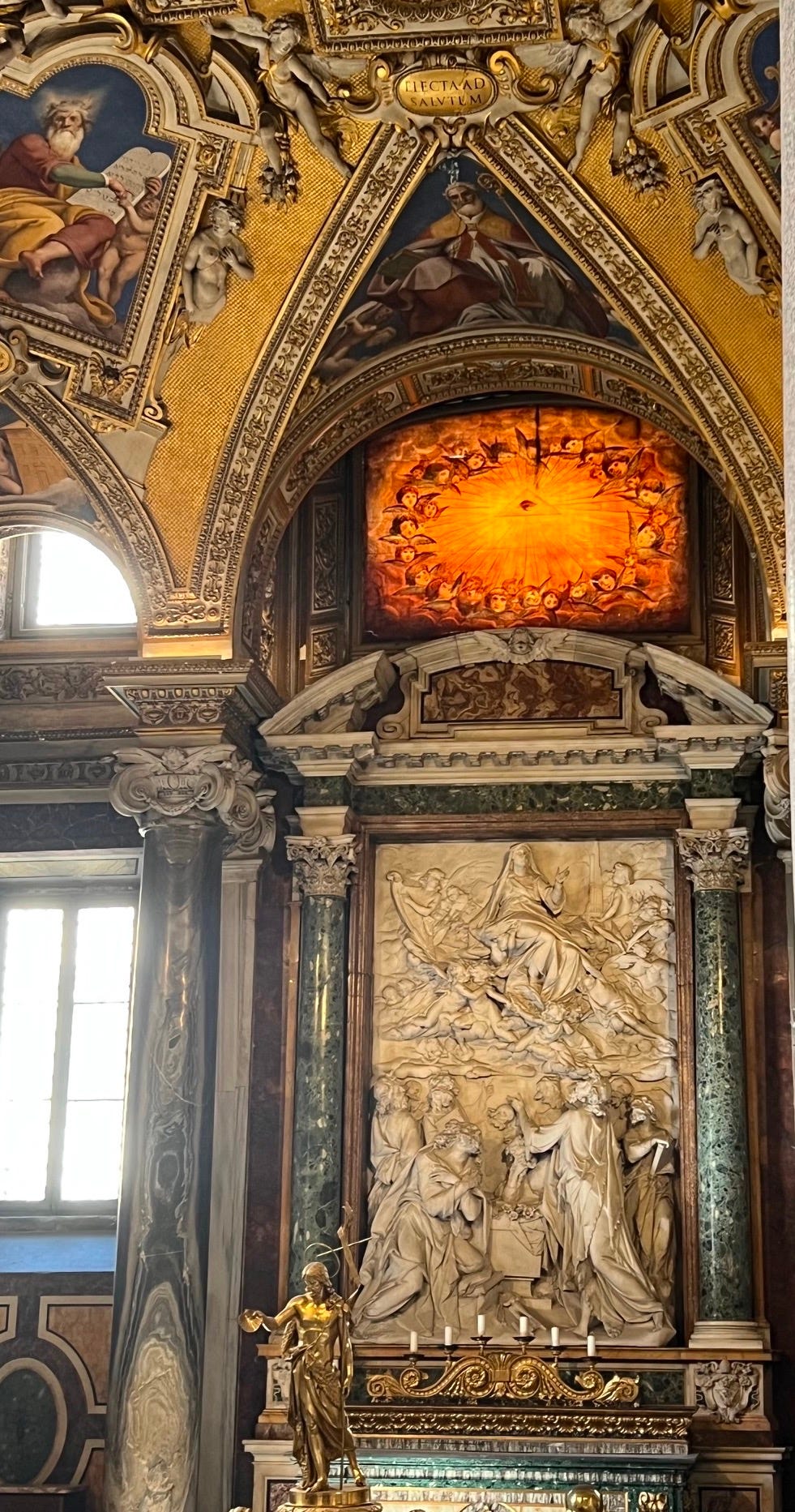
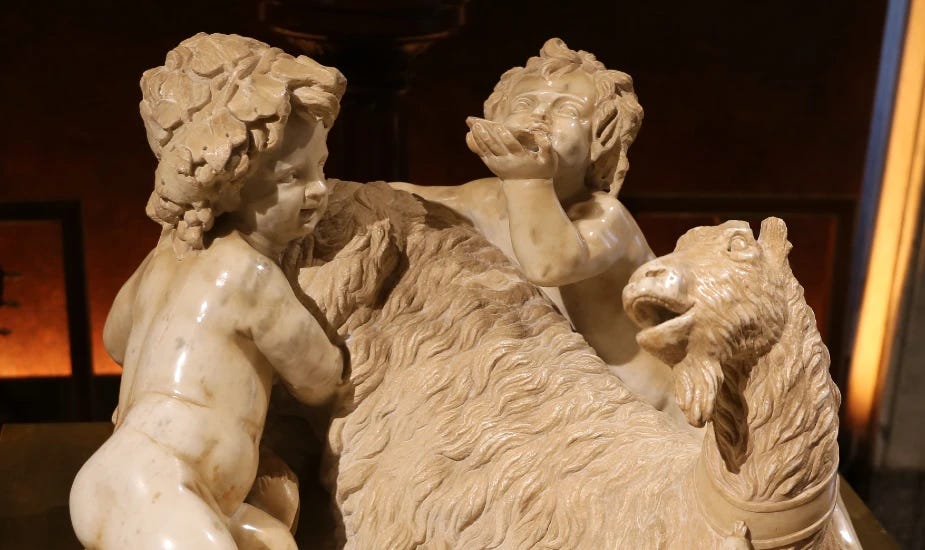
It was there that Gian Lorenzo, at age seven, began his training in his father’s studio—a year later, Pietro was already aware that he had a genius on his hands. Even Pope Paul V could see the writing on the wall, predicting quite accurately that Gian Lorenzo would become “the Michelangelo of his age.” By 10 years old, Gian Lorenzo had completed his first independent works, including “The Goat Amalthea with the Infant Jupiter”, now in the Villa Borghese collection.
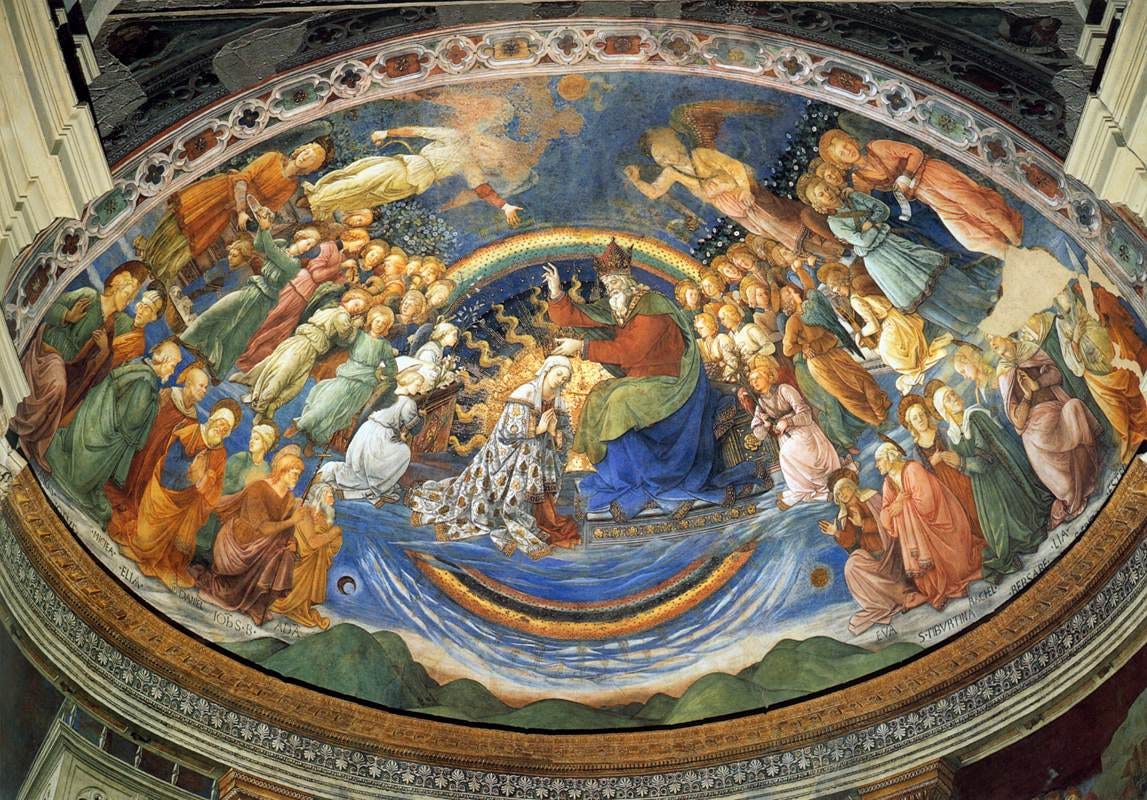
As precocious as Gian Lorenzo Bernini may have been, it was not unusual in that era for a child to progress quickly from following in the footsteps of their father to nipping at his heels. A 2024 show at the Capitoline Museum, “Ingenuity and Eccentricity in Renaissance Art,” told the story of Fra Filippo Lippi and his son Filippino, who by age 10 was working with his father on frescoes for the cathedral in Spoleto. When Filippo died before completing the job, the 12-year-old stepped in to help finish the project.
Perhaps it was easier in those days for a parent and child to find a common language, the balance between discipline and encouragement, the right words of advice. Children, after all, were expected to enter the family business. Fathers were teaching a craft they knew well and, if only for the sake of their own enterprise, they couldn’t afford to neglect a latent talent or overestimate their children’s capabilities. Probably it didn’t demand a huge amount of patience or blind faith to train a 10-year-old Gian Lorenzo Bernini or Filippino Lippi.
I think it’s harder for parents today. So often, children move in entirely different spheres than their parents, with interests, anxieties, and ambitions completely outside of the older generation’s experience. When I decided as a teenager to pursue a career in music, my parents were not so much opposed as confounded. They had no network to call upon to help me and no framework to evaluate my real potential. I’m sure they recognized they did not have a young Mozart in their midst. So all of the support they provided was based entirely on hope and a determination that I should have the opportunity to become what I, not they, envisioned.
Of course, even when parents are trying to get it right, they sometimes get it wrong. Baroque painter Orazio Gentileschi raised his daughter Artemisia largely on his own, having lost his wife in 1605, when Artemisia was only 12 years old. Recognizing the young girl’s talent, he brought her into his studio, and by 17 she had completed her first independent work. But when Orazio asked a colleague, Agostino Tassi, to tutor Artemisia in the rules of perspective (an ugly bit of irony there), the older painter raped her.
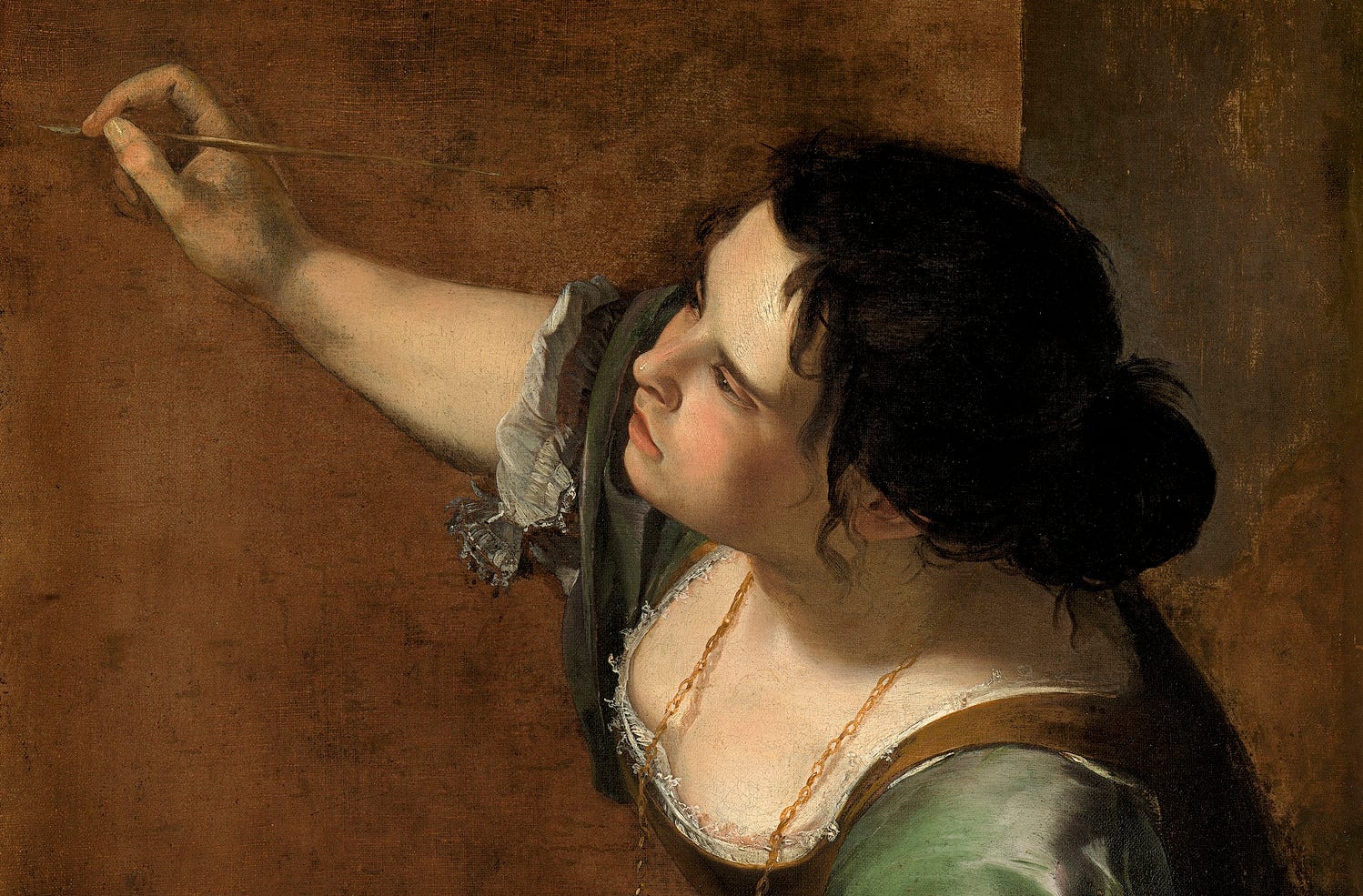
Perhaps motivated more by a desire to clear the family name than to protect his daughter, Orazio pressed charges, subjecting Artemisia to a traumatic trial that wound up with a conviction for Tassi, but left the father and daughter estranged. After the verdict, Orazio arranged for Artemisia to be married and move to Florence, where she established herself as one of the period’s most important painters, rivaling and, in most critics’ judgment, eclipsing her father.
Thankfully, the story does not end there. Despite their brutal shared history and professional competition, Orazio and Artemisia corresponded over the years and eventually reconciled. When she was 45, Artemisia traveled to London to help her father finish a vast ceiling painting at the Queen’s House in Greenwich—father and daughter painting side by side once again. He called her “so skilled that I dare say she has no equal.”
Maybe that’s the best any father can hope for—someone who absorbs the best he has to offer, survives his mistakes, and moves forward next to him, carrying on what he started but better. This was, after all, the dream of those who shaped us—molding us not as masterpieces (at least not most of us) but as ones who could one day begin to carve out a life of our own.
Wishing all of you who celebrate it a Happy Father’s Day!
Amazing, how you can dig beneath the surface of everything you experience, and manage to find a way to touch my heart. Dads...now there is a topic I could go on and on about. I was lucky enough to have great one, and I suspect you did too. And there are a few frighteningly talented and precocious kids in our family, as well. Thanks for the reminder to tread lightly and respectfully around them. Thanks, too, for yet another great post.
As always, a wonderful piece! I love the dive into art history, and making it personal, relating parents and children. Also love hearing you are a musician!,