
A Very Roman Story

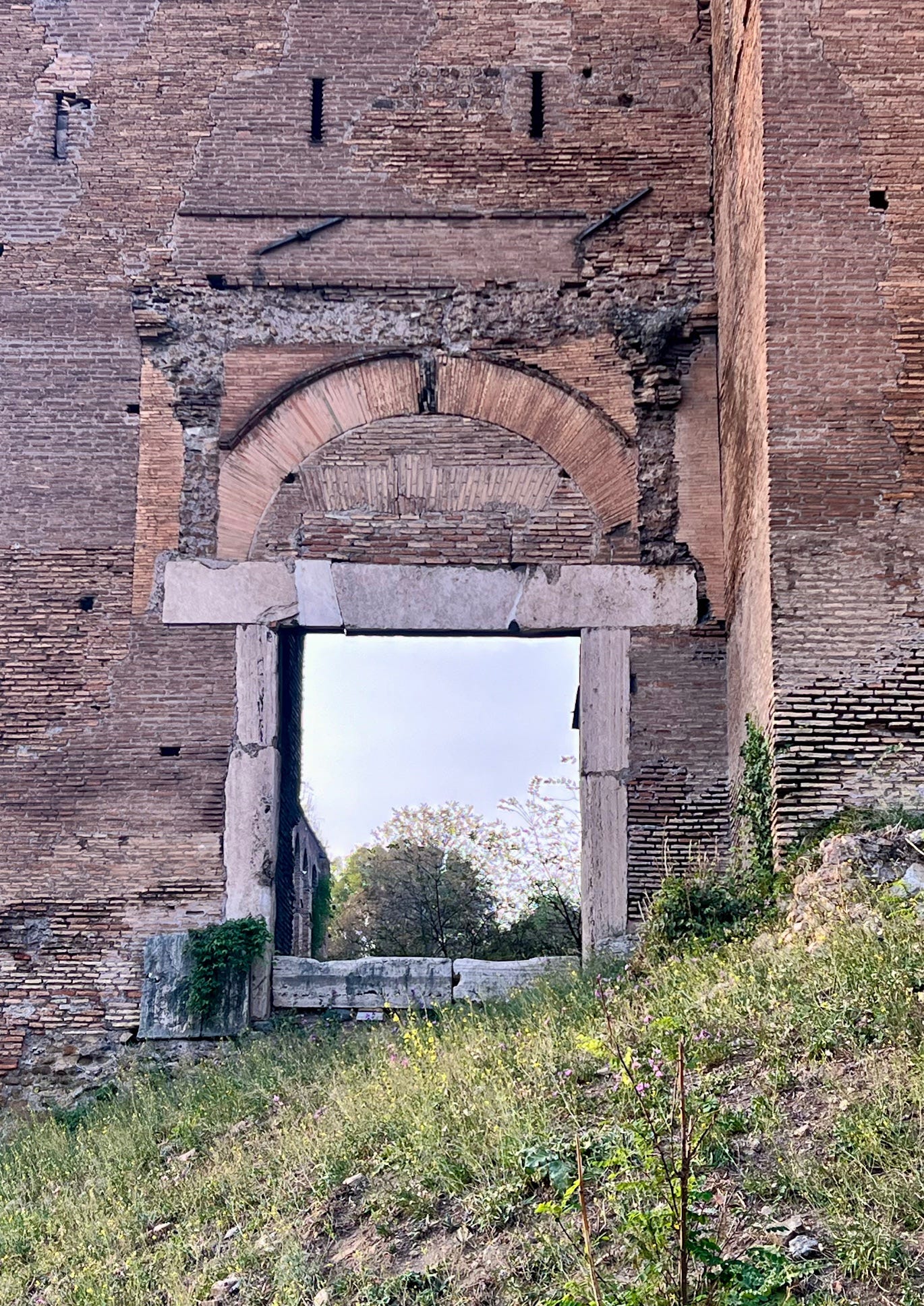
The thing about Rome is: no matter where you’re standing, there’s something or someone buried beneath you.
For myself, I prefer the skeletons in the cellar to be of the antique variety. From 500 years ago is fine. When it’s from 50 years ago, I get a little squirrelly. But in this town, you get a bit of both. They’re always digging up something. Or trying to.

The old guy at the newsstand was down to his last Corriere della Sera on Friday— seems everyone was hankering to read about Rome’s latest excavation, one that delves into some not so ancient history. The case of a judge who had mysteriously gone missing in 1994 had been abruptly reopened, and permission had been given to search for his remains underneath the Casa del Jazz, one of the city’s top music venues.
Sitting at the bar at the Hotel Orologio in Largo Argentina, across from where Julius Caesar caught the sharp end of the knife, I ordered an appropriately crimson Americano and settled into a tale that seemed straight from the Jazz Age: a gangster hideout, an aborted investigation, a nightclub with a sordid past and an over the top pair of cement shoes. My kind of story.
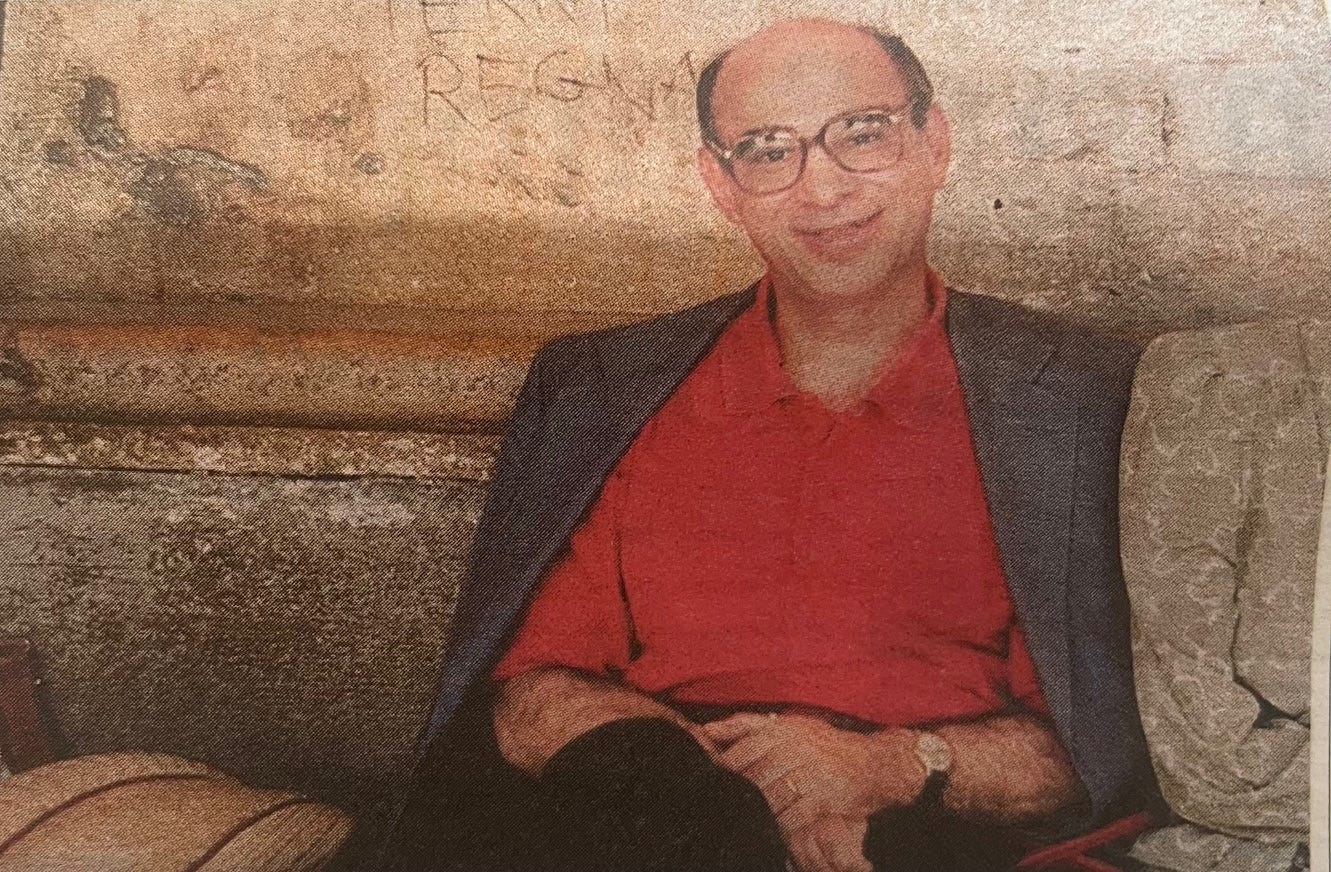
But the photo of Paolo Adinolfi on the front page took a little fizz out of my bitter. Not shot in Weegee black and white but in living color, here was a kindly, studious man with a gentle smile enjoying what could have been a family outing to Ostia. It’s the sort of picture a wife holds onto when her husband leaves the house one morning and never comes back.
Back around the end of the 20th century, Adinolfi was a judge for the Bankruptcy Court in Rome, charged with ferreting out secrets in the corporate spreadsheets during an era of rampant corruption. It was the time of the Tangentopoli affair, when one political party boss caught with his hand in the till set dominoes falling all over Rome and Milan, throwing a hot light on the country’s top elected officials, moneymen and organized crime capos while they were all in bed together. An awkward moment to say the least.
Adinolfi’s bankruptcy work then was not chasing pizzerias late on paying their rent— he was shooting at big fish in a small, shark-infested pond. His white whale was an insurance company called Ambra Assicurazioni. The judge closed them down in 1992, citing possible links to organized crime. On a sunny Saturday morning in July in 1994, Paolo Adinolfi disappeared. His body has never been found.
Hence the Big Dig. No one ever turned up any dirt on Adinolfi himself— by all accounts he was straight-laced, “mani puliti” (clean hands) type of guy. The sort whose hobby is collecting presepe pieces— the figures that fill out the Nativity scene at Christmas. It seemed unlikely that he had secretly absconded to a lost island with a bag full of ill-gotten gains and a twenty year old girlfriend.
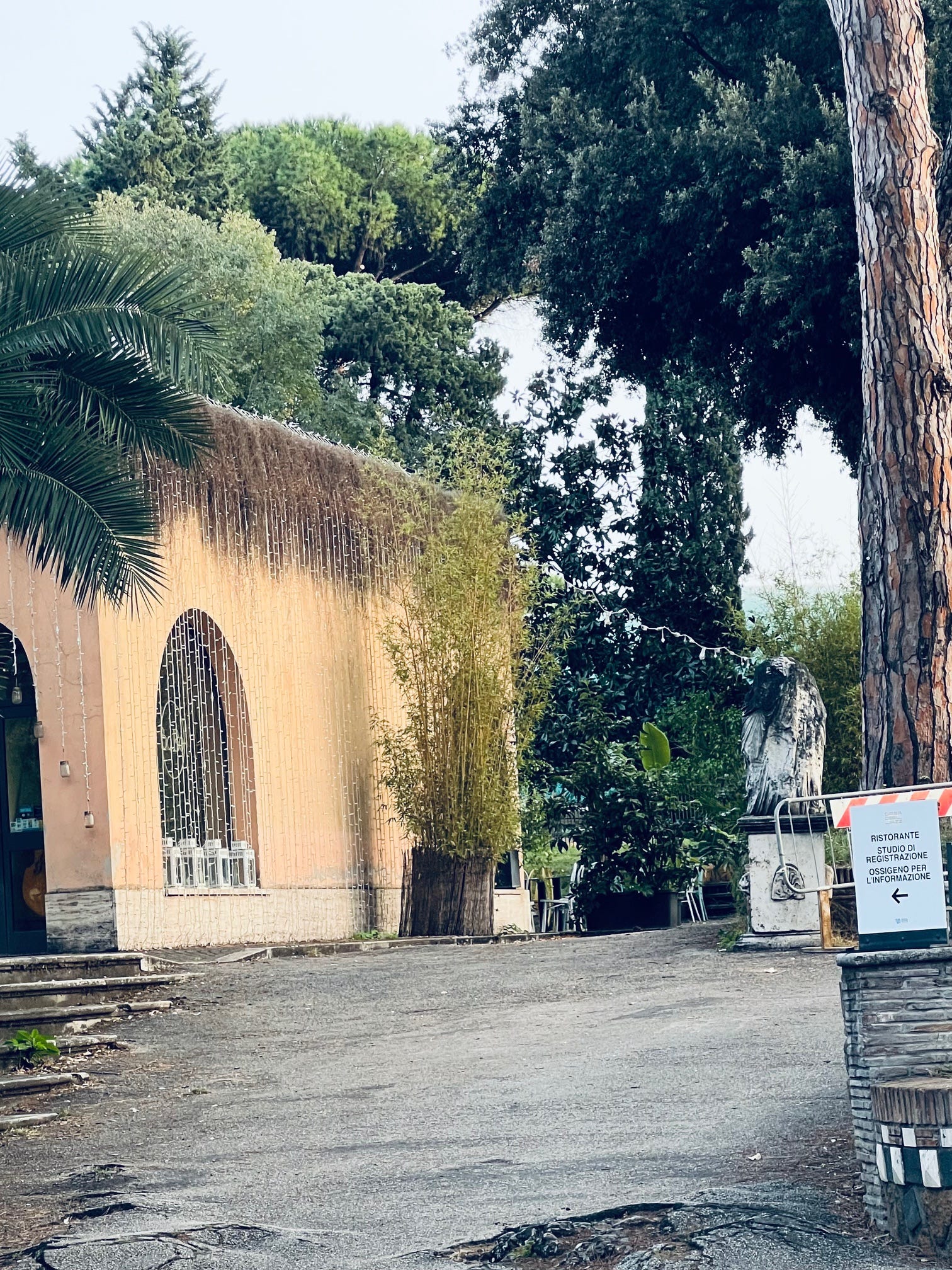
A more likely resting place loomed under the shadows of the giant umbrella pines at Villa Osio near Porto Ardeatina, around the corner from the Baths of Caracalla. Built in the Thirties for a wealthy banker then later sold to the religious Congregation of the Oblati della Madonna, the villa always had privacy going for it, with a garden as vast and dense as a forest.
By the time of Adinolfi’s disappearance, the place was owned by mafia boss Enrico Nicoletti. Known as “The Cassiere” (“the Money Guy”), Nicoletti had turned the villa into a gangster’s lair for the Banda della Magliana, a ill-behaved group with a impressive portfolio of illicit businesses— one of which happened to be Ambra Assicurazioni. The same operation that Adinolfi declared bankrupt two years before he evaporated.
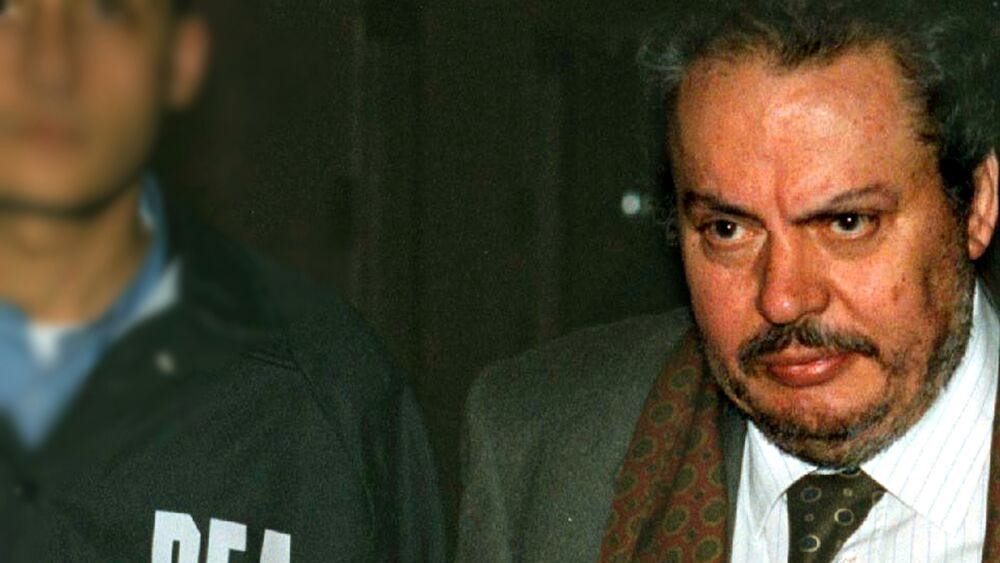
So when a weak-kneed wise guy testified that the judge had been killed by the Magliana crew— allegedly on orders from rogue operators within an obscure international spy network —investigators decided to make a house call at Villa Osio.
There had long been talk among the neighbors about a catacomb turned mushroom farm turned cantina hidden on the villa grounds and connected by a tunnel to one of the house’s outbuildings. Coincidentally, Nicoletti had undertaken to open a tunnel on his property the same year as the judge went missing. The police who arrived in 1996 with shovels were not there to do the gardening.
Which makes the ending of Round One of the Adinolfi affair even more curious. After discovering a cavern 49 feet deep and 82 feet long along the side of the villa, the investigation hit a wall, literally. A collapse in the tunnel blocked what appeared to be a trapdoor, and no one could devise a way to continue the search. Plus, investigators explained, the government was out of money. Case closed.
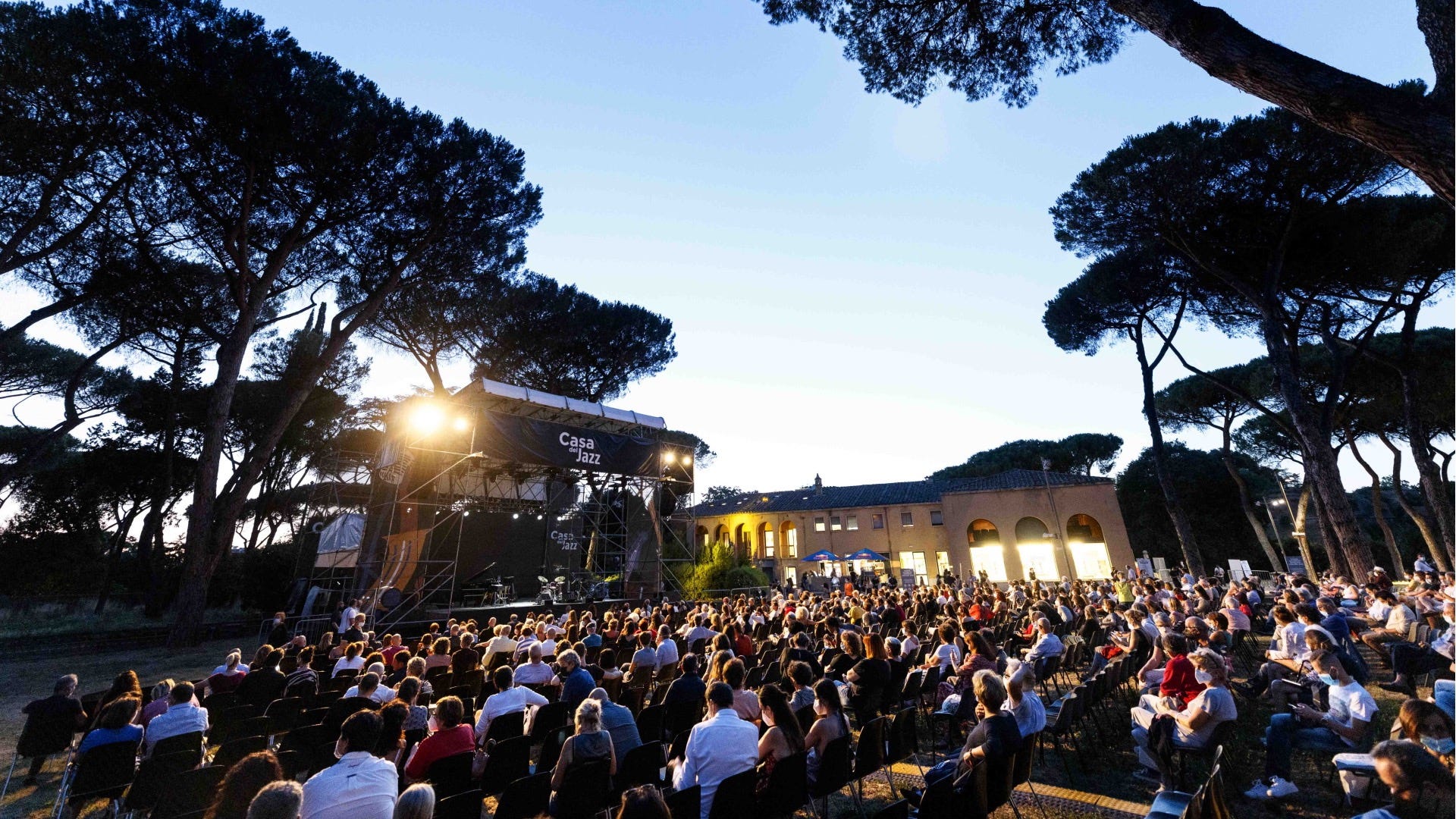
When Villa Osio was confiscated from Nicoletti by the City of Rome in 2001 and subsequently transformed into the multi-stage, restaurant and archival complex known as Casa del Jazz, it appeared that Rome had done what it’s always done: layer one generation on top of another and call it progress. A passion project of then mayor Walter Veltroni, who had been a journalist and film-maker, the opening of Casa del Jazz in 2005 was an event that symbolized the city’s determination to move beyond the dark days of mafia bosses and murders. A little culture cures all. Everyone seemed content to strike up the band and let the ghost of Paolo Adinolfi rest in peace.
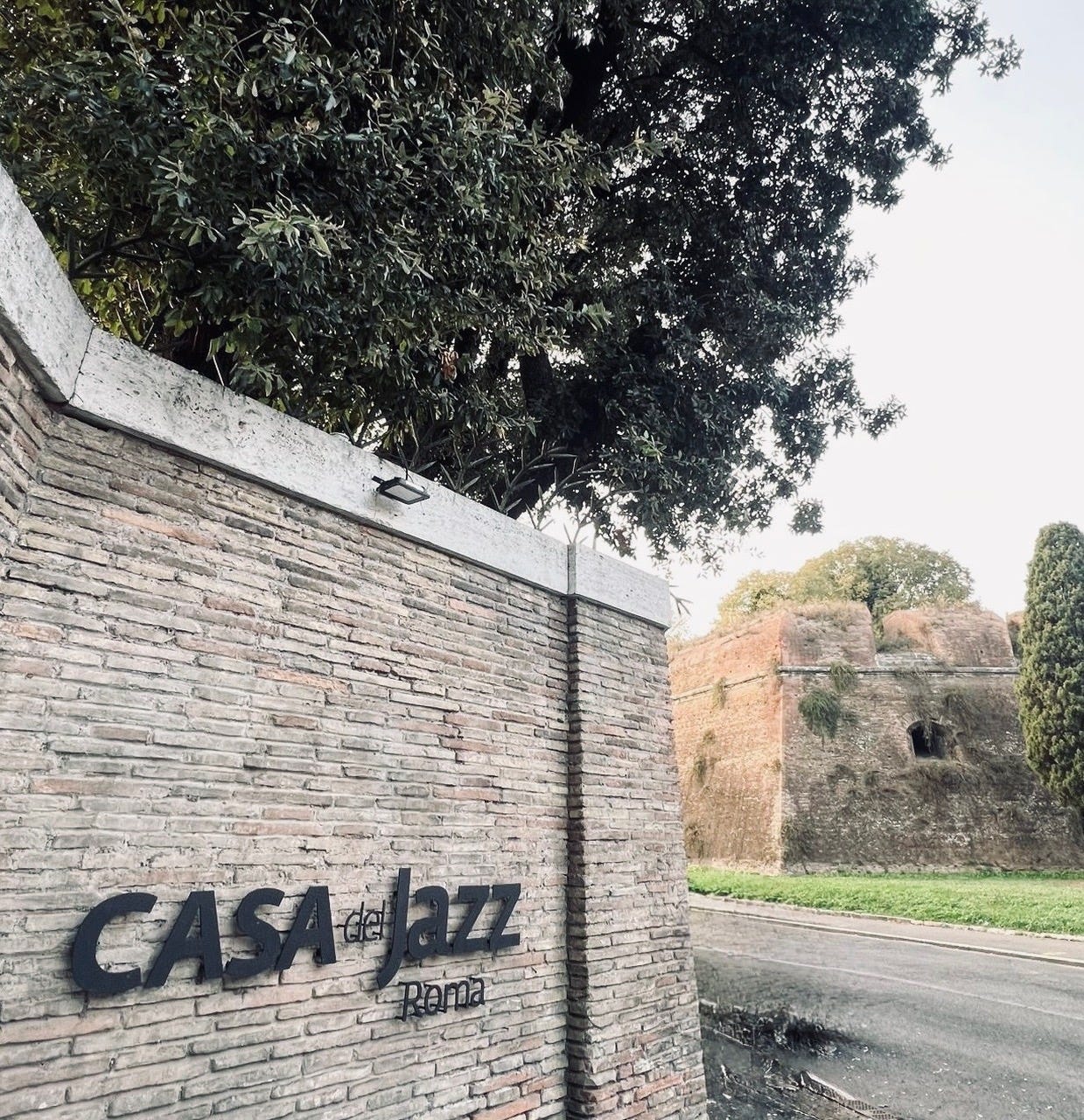
Except for one Guglielmo Muntoni. As the investigating judge in the Adinolfi case, Muntoni initiated the first aborted dig for the tunnel at Villa Osio, and had never shaken his need to get to the bottom of things. Today, Muntoni is no longer a judge, but rather the President of the Observatory on Policies to Combat Economic Crime at the Rome Chamber of Commerce. That’s a ten-dollar title to be sure. Fortuitously, it brings with it an equally substantial budget.
And just like that, the search is back on. What it says about the justice system that such an investigation should be outsourced to the local Chamber of Commerce I’ll leave you to decide.
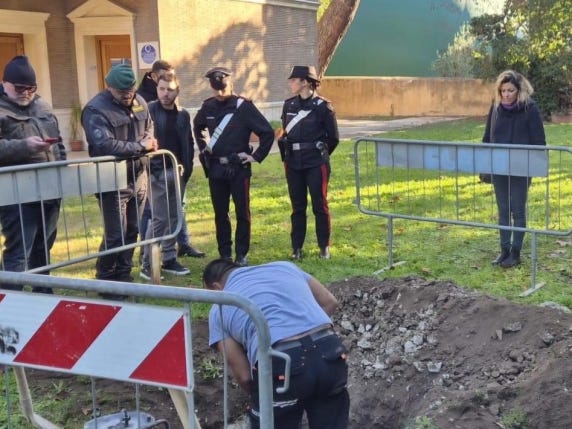
On the 13th of this month, a new excavation was authorized and Muntoni, along with a group of Carabinieri and officers from the Guardia di Finanza, went out with pick axes and shovels. The undertaking is not without risks: they brought along the Bomb Squad and Alpine sniffer dogs, in case they set their spade into some firearms or explosives buried in the catacomb.
They also invited Don Domenico Celano, the bursar for the Congregation of the Oblati della Madonna, the religious group who sold the villa to Nicoletti thirty years prior. The priest claims to know the location of the tunnel later rebuilt by the mob boss. Things come full circle I suppose.
On that note, I folded up my newspaper and headed back out into the Eternal City, passing by department stores that sit atop ancient aqueducts, churches made of marble stripped from the Colosseum, and a pope’s castle built on top of Hadrian’s tomb. It’s the Roman way.
Building on top of buildings. Stacking up centuries of shallow graves. A jazz band improvising on an old tune and everybody dancing on bones.
Thanks so much! Really happy you enjoyed it. Yea, I'm kind of fascinated by this sudden trend to reopen long-ago shelved mafia cases. There's one going on with Mattarella's brother as well-- who was murdered back in 1980. Talk about the slow-moving wheels of justice. They must be powered by an Ape engine.
I was thinking the same!! Talk about a cliff-hanger. So far, they don't seem to have found any of said skeletons-- I think they started on Friday and then on advice from someone (maybe the priest), decided to try a different part of the grounds. But yes, I'll let you know if they hit pay dirt, so to speak. So glad you enjoyed the story.